Dear Reader,
I believe one tiny gold stock is now the absolute prime candidate for America's next strategic investment… and perhaps the single most important deal of all.
See, 92 years ago, in the middle of a national emergency, Washington created a fund unlike anything before or since.
It answers to one man. Not Congress. Not the courts. Not even the Federal Reserve.
It can buy gold, sell currencies, and move entire markets — in secret — on a single signature.
Most Americans have never heard its name. In a few minutes, I'm going to give it to you.
The last time this fund's weapon fired at full power, the price of gold was rewritten overnight.
The government walked away with a windfall so large it bankrolled an entirely new arm of the Treasury…
And the biggest gold stock in America became the highest-priced stock on the New York Stock Exchange — mailing out the fattest dividend checks — while the rest of the country stood in bread lines.
That fund was never shut down.
It has been quietly used twice since — both times to stop a run on the dollar.
Mexico, 1995.
The panic of 2008.
It is still active in the Treasury Department right now.
And 17 months ago, the man who controls it looked into a camera and announced exactly what he intends to do next.
I'll play you his exact words shortly — including the part he tried to walk back.
The news didn't cover any of this.
Every camera in the financial world is pointed at the Fed's next rate decision… at whichever AI stock just added $100 billion in a day… at the war headlines… at gold's price ticking across the bottom of the screen...
While the cameras point the wrong way, the real story is unfolding in vault manifests, loan documents, and federal filings almost nobody reads.
I've read them.
But this investigation didn't start in the filings.
It started in a private meeting on March 2nd — one of two conversations I had that day with sitting United States Congressmen, arranged through my private network.
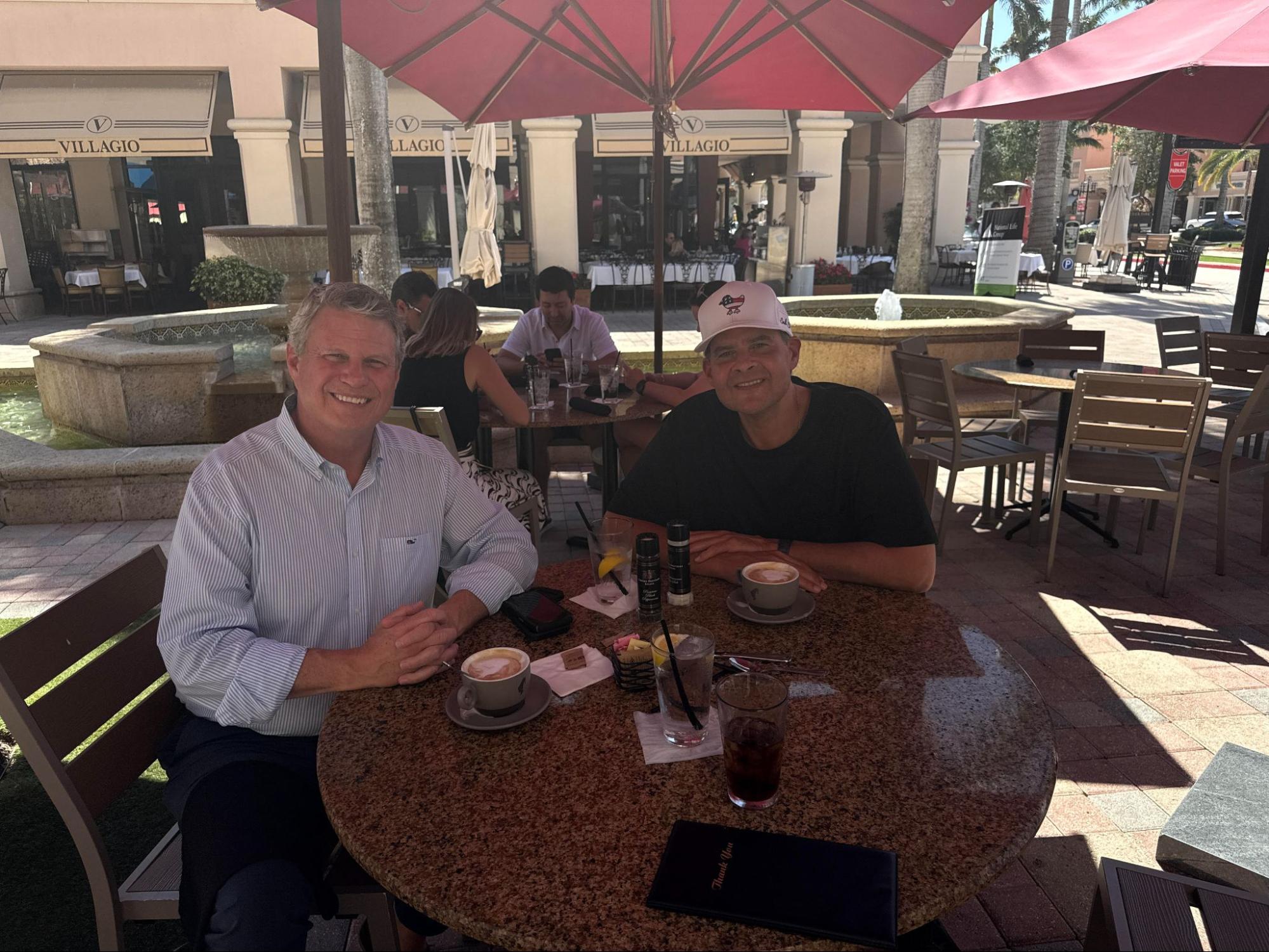
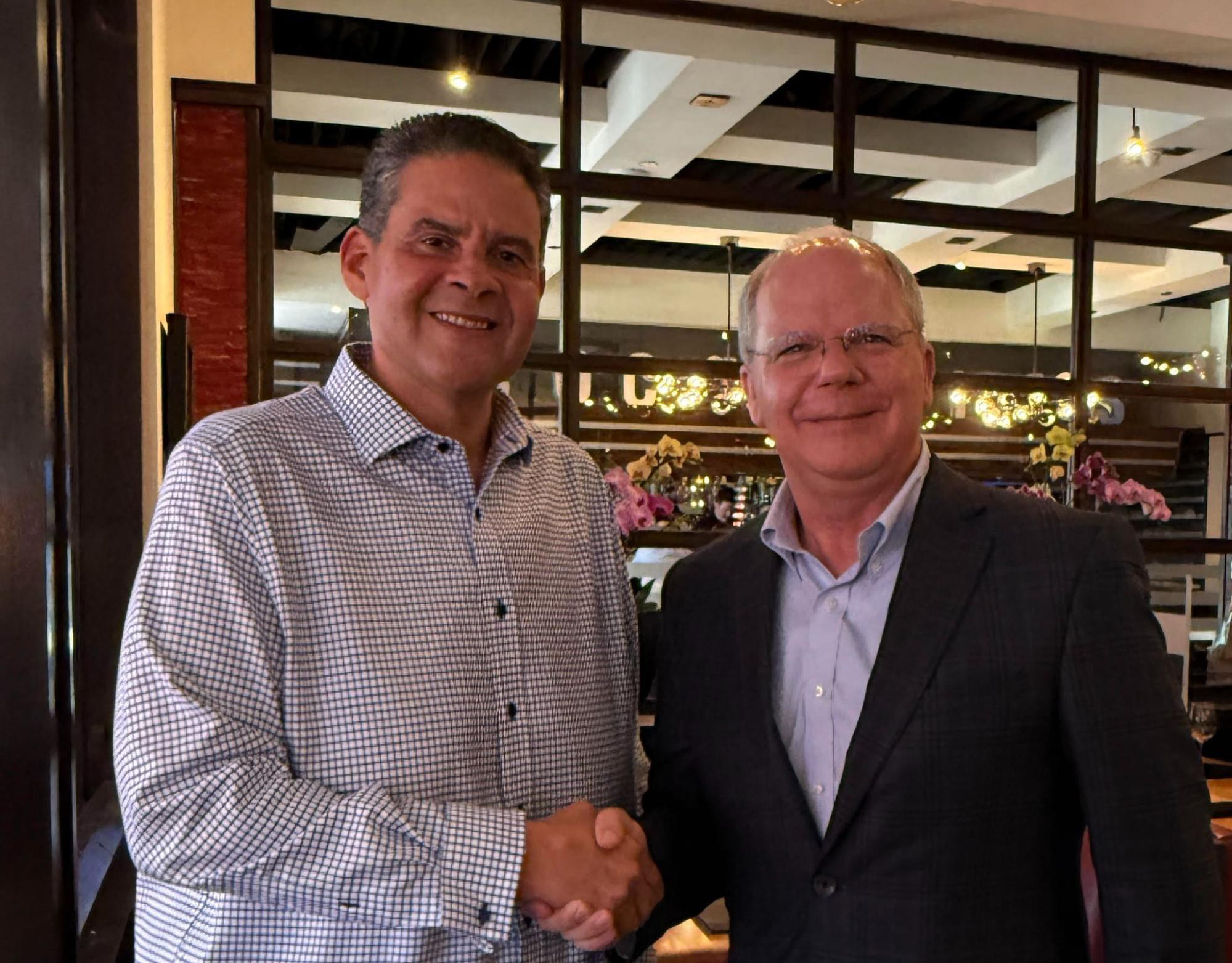
Dylan Jovine with Congressman Bill Huizenga and Brett Guthrie
The man across the table from me in this photo oversees the money behind America's financial warfare. The sanctions. The freezes. The pressure campaigns you read about three weeks after they've already worked.
When a man with that jurisdiction talks about the state of the world, you pay attention to what he circles back to.
And what I began looking into after that meeting is exactly what the world's central banks have been doing with their money since February 2022.
They haven't been buying stocks. Or bonds.
They've been hoarding gold.
I asked my research director to pull one chart.
Two lines.
The first: China's holdings of U.S. Treasury debt. Sliding, year after year, to an 18-year low. Half of the largest foreign fortune ever parked in American bonds — gone.
The second: the gold held by the world's central banks. Climbing. Relentless. Crossing above their holdings of our debt for the first time in a generation.
I've been reading financial charts for over 30 years. Charts don't rattle me.
This one did.
The Congressman wasn't describing a market.
He was describing exactly what this chart shows: the world's most conservative money — the institutions that move last and never explain — wasn't hedging against the dollar.
It was leaving it behind.
My team and I spent the following weeks pulling every thread — the filings, the loan documents, the board minutes, the research papers nobody reads.
And what I found exposes the greatest lie being broadcast on financial television right now.
You've been told the gold story is about inflation.
About fear. About nervous money hiding in pretty rocks.
What's actually happening is the first monetary war between superpowers in 50 years.
China — an $18 trillion economy with capital fleeing and growth stalling — has spent four years executing the only escape plan it has left:
A break-out from the American dollar itself. Built on gold.
They've been caught.
Not by me — by the official record. I'll show you the documents.
And Washington's counterattack has already begun.
Signed. Funded. Filed.
Twice in the last century, the United States government rewrote the price of gold by decree — and overnight, every saver in America woke up poorer.
Both times, the few holding the right gold stocks walked away with gains as high as 10,000% while ordinary stocks went nowhere — or straight down.
The few holding the right gold stocks — while ordinary stocks went nowhere, or straight down
My research says the third rewrite has begun.
Except this time — for the first time in American history — the government isn't just setting the price of gold.
It's choosing a miner.
I believe one tiny gold stock is now the absolute prime candidate for America's next strategic investment… and perhaps the single most important deal of all.
Because this deal would protect the U.S. dollar from collapse in the midst of the largest central-bank gold-buying spree since records began.
The window to get positioned ahead of it closes the day a multi-billion-dollar federal financing package receives its final signature — expected within months.
I'll show you everything.
But first, you deserve to know who I am — and why men with that kind of power take my calls.
Who Am I — and Why Should You Listen?
My name is Dylan Jovine.
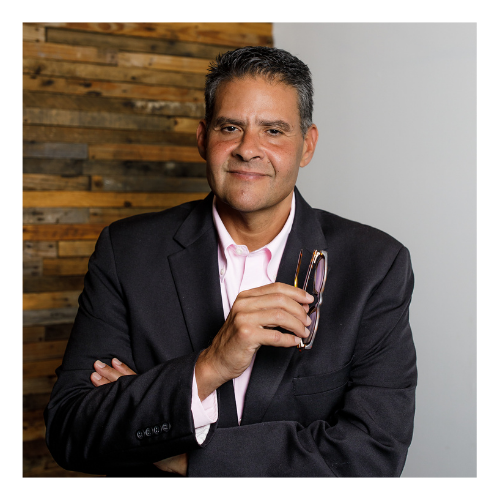
I didn't grow up rich. I grew up standing in line for food stamps in Queens.
Like any dirt-poor kid in New York desperate to change his fortune, I set my sights on Wall Street.
And like every "nobody" trying to make it on The Street, I was laughed out of every Ivy-League-filled room.
But one man took a chance on me — because he'd been an outsider himself, before saving New York City from bankruptcy in the 1970s and building his own respected firm.
I wasn't going to blow my chance. By age 24, I had built my own firm at 100 Wall Street — one of the youngest broker-dealers in history.
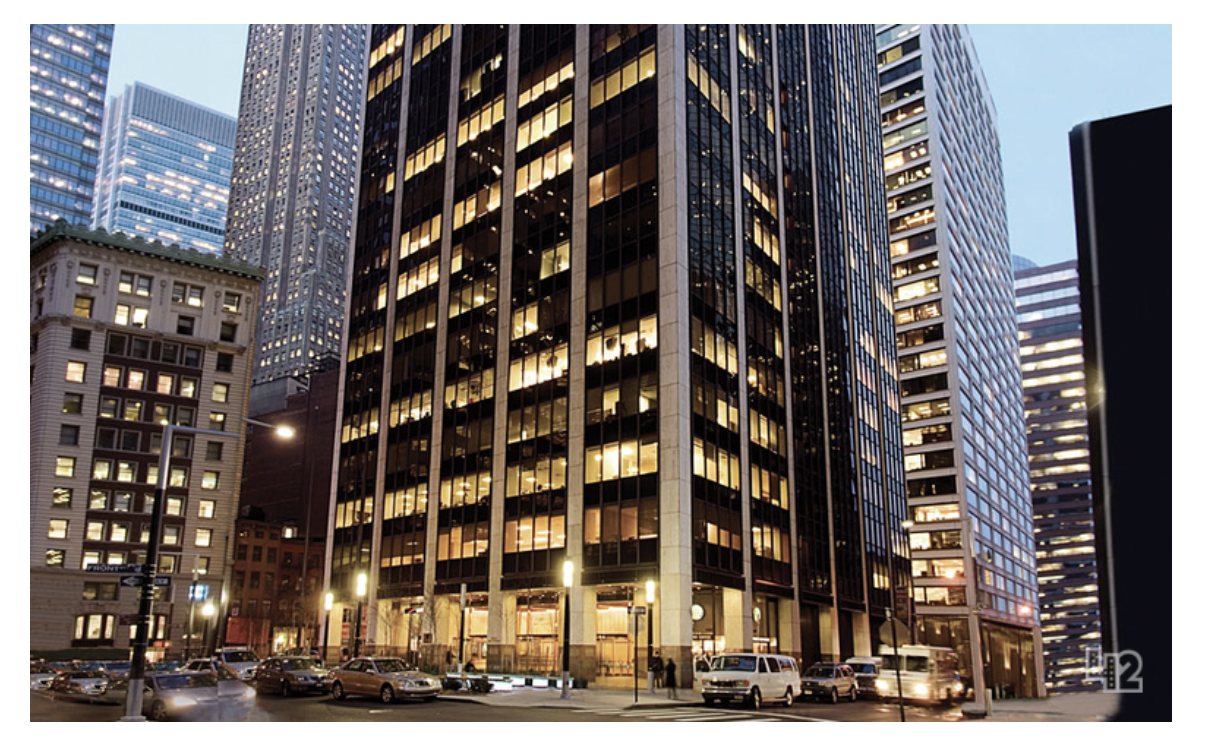
100 Wall Street
Since then, I've made one call after another that landed me on television and even in the White House.
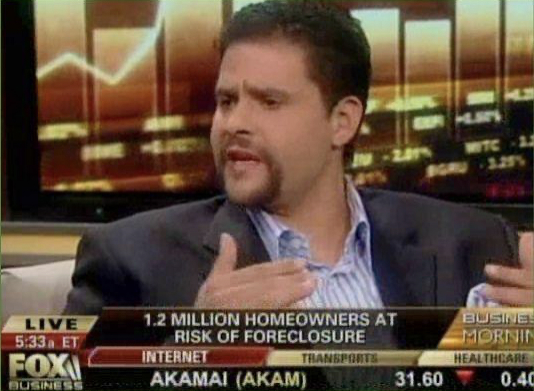
Dylan Jovine on Fox Business
A full year before Lehman Brothers collapsed, I issued a public warning that the housing market was a ticking time bomb.
“The market has no place else to go but down. It's not a question of 'if' it's a question of 'when.'”
That call got me invited to meet privately with President George W. Bush and Vice President Dick Cheney.
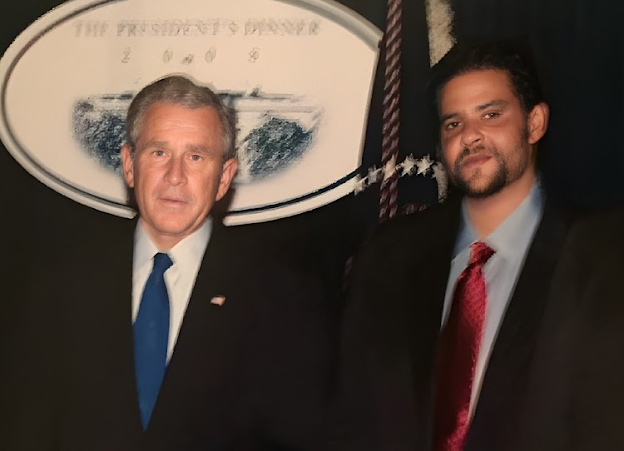
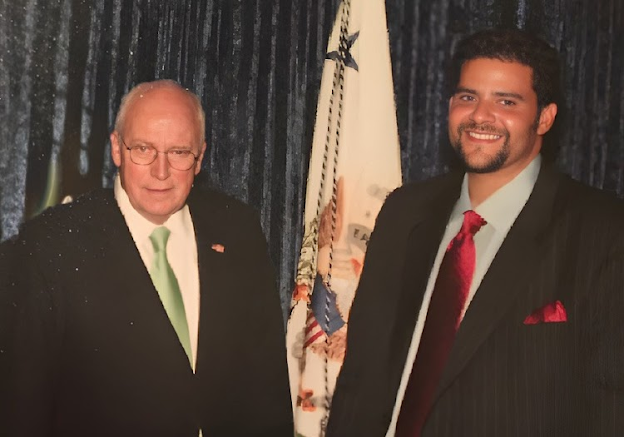
Dylan Jovine with President George W. Bush and Vice President Dick Cheney
When the Dow dropped 54%, I went on CNBC calling the bottom — telling anyone who would listen that a stock market at 6,500 is like walking into a dealership where everything is marked 90% off.
Anyone who heeded that call had the chance to book gains like 459% on AutoNation… 646% on American Express… and 700% on Starbucks.
In March 2020, I called the bottom of the Covid crash almost to the exact day.
“FACT: When we get to the other side of this, the market will have a “SNAP-BACK” rally because prices and interest rates are so cheap.”
The result: 102% on PagSeguro.
124% on DraftKings.
155% on Floor & Decor.
202% on Scotts Miracle-Gro.
Three historic crashes. Three documented calls.
Today, more than 500,000 readers across 28 countries follow my research.
But here is the call that matters most for what I'm about to show you.
In 2021, I watched Washington spend money like the bill would never come due. I told my readers the dollar was in trouble — and to buy gold at $1,800 an ounce.
“The world is entering a new cycle of war. Russia and China are trying to flip the international script just like Germany did in 1914.”
Wall Street laughed. Awash in cheap money, they called gold a relic.
But I know history. Every time paper money inflates, gold answers.
Today gold trades around $4,000 — after touching an all-time high near $5,600 this January.
More than double. From one call.
And one more.
Years ago, I told my readers to buy an unknown tech company called Palantir around $7 a share.
Wall Street saw another software seller.
I didn't see a software company. I saw a national weapon — the data platform the U.S. military, the spy agencies, and the CIA physically could not operate without.
It ran as high as $207.
Over 2,800%.
A $5,000 investment could have grown as high as $142,850.
Remember that method. A company the government cannot function without, found before Wall Street understands what it's looking at.
It is the exact method that led me to the gold stock behind today's letter.
One more thing you should know about me:
After I publicly exposed the link between American technology and China's military buildout, the Chinese Communist Party sent a woman to "talk to me" about my statements.

I reported the contact to federal authorities immediately. And I kept publishing.
The stock at the center of that warning — Micron Technology — has since catapulted 677%.
We don't catch the full move on every trade.
But my readers have reported some remarkable outcomes of their own.
“You are the best and most accurate investing advisor I have ever used. I find you to be an honest, kind, and trustworthy adviser — and far above all other services in integrity.”
“I’ve been following Dylan’s recommendations for almost 20 years. His best idea made me almost 7 times my original investment.”
“That was the fastest money I have ever made in my life. You recommended Loxo Friday morning and it was taken over Monday. Wow.”
My refusal to back down is why two U.S. Congressmen asked to meet me off the record on March 2nd.
It's why I was invited to The Breakers in Palm Beach to sit down privately with Donald Trump Jr.
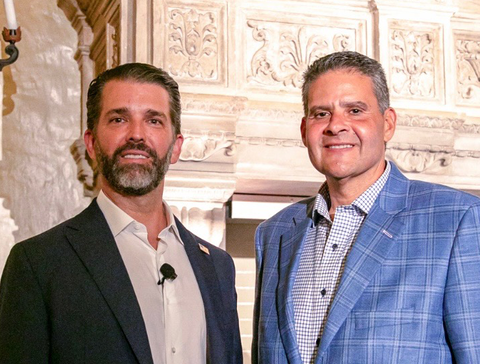
And it's why, when I tell you the gold market is not what you've been told it is…
You should hear me out.
Because what you're seeing on your screen — the record central-bank buying, the strange strength in gold, the political fights over Fort Knox — is not a series of disconnected stories.
It is a war. A quiet one. Over the only thing that has ever truly backed American power.
And there is one tiny company positioned at the dead center of it.
To understand the fortune at stake, you first have to understand a single, terrifying secret about the U.S. Dollar.
The Secret Under the Dollar
Here is the truth nobody in Washington wants to say out loud:
The United States dollar has never stood on its own.
For every single day of its reign as the world's money, the dollar has stood on an anchor.
And every time the anchor failed, the price of gold was rewritten — and a small group of investors got breathtakingly rich.
The first anchor was gold itself.
At the end of World War II, the United States held two-thirds of all the monetary gold on Earth.
That mountain of metal is the reason 44 nations gathered in a New Hampshire hotel in 1944 and handed the dollar the throne of the world.
Not because they loved us.
Because we had the gold.
Every reserve currency before ours — Spanish silver, the British pound — reigned exactly as long as its backing held. When the backing failed, it all came down — and the savers holding the paper were the last to find out.
America's founders of the postwar order understood this. So they built the dollar's throne directly on top of the largest gold hoard in human history.
Then we spent it.
By 1971, more than half of that hoard's dollar value had drained away — from $22.8 billion down to $10.2 billion — as the world lined up to swap paper for metal.
President Nixon slammed the gold window shut before the vaults ran empty.
The first anchor was gone.
So Washington found a second one: oil.
A handshake with Saudi Arabia made the dollar the mandatory currency of the world's energy. Any nation that wanted to keep the lights on had to hold dollars — and park those dollars in U.S. debt.
That single arrangement is the only reason America has been able to borrow $39 trillion and keep functioning.
For 50 years, the second anchor held.
Then, in February 2022, one signature cut the chain.
When Washington froze roughly $300 billion belonging to Russia's central bank, every finance minister on Earth learned the same lesson at the same moment:
Money parked in the American system isn't yours. It's a permission slip.
Permission can be revoked.
Here is what the evening news never showed you about what happened next:
Central banks began the largest official gold accumulation since records began in 1950 — over a thousand tonnes a year, roughly double the pace of the entire previous decade.
And they did it in the dark.
In 2022 alone, two-thirds of official gold purchases — 741 tonnes — were never publicly reported. The buyers hid.
They didn't just buy. They brought it home. The share of central banks pulling their gold out of foreign vaults and back inside their own borders nearly doubled in a single year.
And the nation whose money had been frozen?
Russia's gold reserves surged 72% in value — a $96 billion gain that quietly offset a third of everything the freeze took.
Every rival government on the planet watched that math and reached the same conclusion:
Gold beat the freeze.
A $96 billion gain — offsetting a third of everything the freeze took
Four years later, the receipts are in.
The European Central Bank has now confirmed something that has not been true since the height of American power:
Gold has overtaken U.S. Treasury bonds as the #1 reserve asset held by the world's central banks.
27% of global reserves now sit in gold. 22% in our debt.
In the early 2010s, gold was less than 13% of global reserves and U.S. debt was upwards of 30%.
That's a clear statement.
The world's bankers now trust yellow metal over America's promises — for the first time in generations.
The value of gold in foreign central-bank vaults is approaching $4 trillion.
That's quadruple what it was a decade ago.
Understand what that means for the money in your pocket.
The dollar's second anchor — the automatic global demand for our debt — is failing in real time.
When foreign buyers stop absorbing our bonds, your mortgage rate rises. Your car loan rises.
The government's interest bill devours the budget that was supposed to fund everything else.
You don't need a PhD in economics to feel it. You feel it every time you fill a tank or buy groceries.
Washington knows this.
And so does the one rival with both the motive and the means to finish the job.
I'm about to show you who… and what they're doing exactly.
And how an obscure 92-year-old law could soon send a single American miner roaring upwards of 10,000%.
Let me explain.
The Break-Out
If you turn on financial television right now, you'll see the same tired debate.
Is gold "overbought"? Is it an inflation hedge? Should you allocate 5% "just in case"?
They are completely missing the real story.
The biggest gold buyer on Earth is not a hedge fund. It is not your neighbor buying coins.
It is the People's Bank of China — and it is not hedging anything.
It is escaping.
Consider Beijing's position.
An $18 trillion economy with growth stalling and capital running for the exits. A rival — us — that has demonstrated it can seize any nation's dollar reserves with a signature.
China cannot win a spending war against America's technology giants.
It cannot force the world to trust its own currency — nobody wants to store their national savings under Communist Party control.
But Beijing found the one asset that requires no trust at all.
Gold doesn't need a government's promise. It can't be frozen from Washington. It can't be printed, sanctioned, or switched off.
For a regime that watched Russia's dollars vanish overnight, gold isn't an investment.
It's the tunnel out.
And the digging is on the record. Look at the four moves — each one documented in official data:
Escape Move #1:
Dump the IOUs
At its peak, China held $1.32 trillion of U.S. Treasury debt — the largest foreign stockpile on Earth.
Today: roughly $659 billion.
Cut in half.
That is more than $650 billion walked quietly out of America's bonds — with China's holdings now at their lowest level since the 2008 financial crisis, and Beijing's own regulators urging Chinese banks to scale back U.S. exposure even further.
Escape Move #2:
Hoard the metal
While the dollars walked out, the gold walked in.
China's central bank has now bought gold for 20 straight months. That's its longest buying streak in at least 10 years. One of those purchases — made this June — was its biggest since 2023. And it came during gold's worst quarterly drop in 13 years.
When gold dipped, the smartest state buyer on Earth didn't flinch.
It accelerated.
2023
Beijing's longest gold-buying streak in at least 10 years. The June purchase was its biggest since 2023 — made during gold's worst quarterly drop in 13 years. When gold dipped, Beijing accelerated.
Escape Move #3:
Hide the count
Beijing admits to about 2,313 tonnes.
Goldman Sachs ran the actual flows through the London market and estimated China's real buying at 4.8 times the official figure.
At that rate, China's true hoard could be double or triple what it reports. Which is exactly what you'd expect from a country building a war chest it doesn't want the world to know about – yet.
Escape Move #4:
Price it without us
This is the move almost nobody in America noticed.
In June of last year, the Shanghai Gold Exchange opened its first vault outside mainland China. In Hong Kong. Run by the Bank of China. It settles gold contracts priced in yuan — with real, physical delivery — beyond the reach of the American system.
Beijing's own policy papers state the goal in black and white: spread yuan-based gold prices "in mainstream international markets."
Next stops on the announced expansion map: Singapore. Zurich. Dubai.
For a century, the world's gold has been priced in two cities — London and New York — in dollars.
China is building the third city. In its own currency.


Now step back and look at all four moves on one board.
Sell America's debt. Stockpile the one asset America can't freeze. Hide the true count. Build a parallel market to price it without us.
That is not diversification.
That is a four-year escape from the dollar system — openly funded, and gathering speed. And China isn't running alone: the latest survey of the world's reserve managers found a record number of them planning to add gold, and not one of them planning to reduce.
Here is where every analyst on television stops. "De-dollarization." Scary music. Buy a coin.
And here is where they're wrong — catastrophically wrong — about what happens next.
Because they've forgotten who actually owns the battlefield.
And knowing this is the key that will help shrewd investors unlock a windfall that could turn even a $1,000 stake… into as much as $100,000 in just a few years.
The Board Only One Side Can Win
Put yourself in the White House war room for a moment.
Your rival has committed its escape to a single asset. Everything — the Treasury sales, the secret buying, the offshore vaults, the currency plans — funnels into gold.
Now look down at the board.
The United States of America holds 8,133 tonnes of gold.
More than Germany and Italy — the number two and number three holders on Earth — combined.
Three and a half times what China officially admits to owning.
And here's the number that should end the debate. Take the highest estimate of China's hidden buying. Triple the official count. America still holds more.
We've held it for 90 years. Through every crisis, every administration, every temptation to sell.
Roughly 70 cents of every dollar in America's official reserves is already gold — among the most gold-committed reserve structures of any major nation on Earth.
Your rival just bet its monetary survival on an asset you dominate more completely than any nation has ever dominated anything.
What do you do?
You don't fight the gold war.
You end it.
You force the contest onto the metal — where no one can touch your lead — and you chain your currency to the one asset you control, before the rival finishes digging.
China spent four years digging an escape tunnel.
The tunnel exits into a vault America owns.
That is the move my research says is now underway — not as theory, but in signed documents, approved financings, and federal filings I'm going to walk you through piece by piece.
And if I'm right, it means the third great rewrite of gold's price — the event that made fortunes in 1934 and again in the 1970s — is not a question of if.
It's a question of when the paperwork clears.
To see what a rewrite does for the smart investors who have carefully positioned themselves, you need to see what happened the last two times.
Because both times, Washington ran the exact same play.
And both times, it worked.
But as you're about to see… There is something uniquely powerful about today's current situation. Something that makes the potential profits bigger than ever before.
I'll explain shortly.
The First Rewrite: 1934
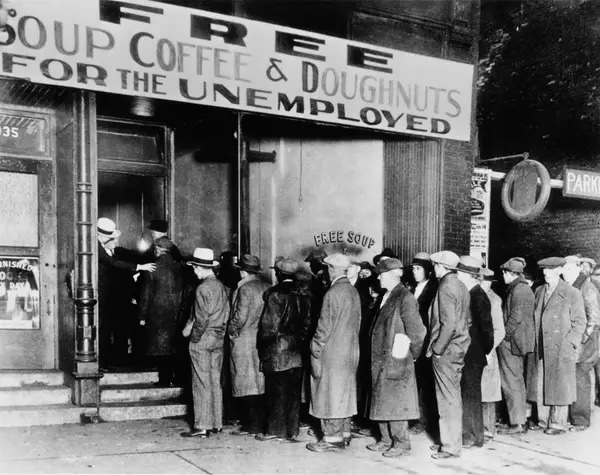
Picture America in the winter of 1933.
Banks failing by the thousands. Unemployment at 25%. Farm prices collapsed. The country is starving for money that holds its value — and the dollar is chained to a gold price set decades earlier.
On January 30, 1934, President Franklin Roosevelt signed the Gold Reserve Act.
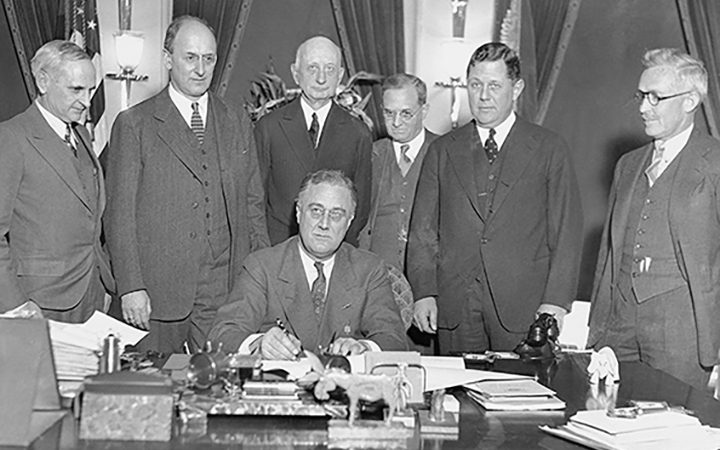
With one law, Washington did three things that had never been done in American history.
First, it took possession of the nation's monetary gold — every Federal Reserve bank was ordered to hand its metal to the Treasury.
Second, it rewrote the price. Gold went from $20.67 an ounce to $35.
Overnight.
Not by markets. By decree.
Every paper dollar in every American wallet lost roughly 41% of its gold value while the country slept. The savers paid.
Third — and this is the part they don't teach — the government kept the difference.
Revaluing the hoard produced a $2.81 billion windfall for the Treasury. In Depression dollars, a staggering sum — not created by taxes, not by borrowing, but by changing a number.
Money from a pen stroke.
January 30, 1934
Two years later, the government poured concrete in Kentucky for a fortress to hold it all: the United States Bullion Depository at Fort Knox.
Now — what happened to the investors who owned gold's source?
The largest gold miner in America at the time was a South Dakota company called Homestake Mining.
While the Dow Jones collapsed 73%, Homestake's shares rose 474%.
And Homestake wasn't alone. Dome Mines — the biggest gold producer in Canada — climbed 558% over the same stretch.
The two largest gold miners on the continent. Both up more than fivefold. While everything else on the board burned.
Homestake became the highest-priced active stock on the entire New York Stock Exchange — and it kept climbing, from $65 a share in 1929 past $480 by 1936.
And it didn't just rise. It paid. In 1935 alone, Homestake mailed shareholders $56 per share in dividends — on a stock that had cost $65 before the rewrite.
Nearly the entire purchase price, handed back in cash, in a single year — with a $100 Christmas bonus for every miner — while a quarter of the country couldn't find work.
Both companies raised their dividends straight through the Depression.
$10,000 in the Dow at the 1929 peak was worth about $3,600 by 1935.
$10,000 in Homestake was worth about $62,000.
Same six years. Same country. Same Depression.
One group of investors was wiped out. The other was collecting the biggest dividend checks on the Exchange.
The difference was a single decision: standing on the right side of the rewrite.
Same Depression.
I'm going to show you how to be on the right side of this one, happening today, in just a moment. But first… here's the second rewrite.
The Second Rewrite: 1971
By 1971, the world was draining America's gold faster than Washington could stomach. Nixon shut the redemption window in August.
Two years later, Congress marked the dollar down again — fixing gold's official price at exactly $42.22 an ounce.
Hold onto that number. You're going to see it again, and when you do, I want you to remember where it came from.
With the chain cut, gold did what 70 years of suppression had been holding back.
$35 an ounce became $850 by January 1980.
A 2,329% rise.
The dollar's purchasing power?
Cut by more than half across the decade. Everyone holding cash paid for the rewrite — again.
The S&P rose 43% over the same stretch.
$10,000 parked in "safe" blue chips through that whole era crawled to about $14,300.
The S&P managed 43%. $10,000 in blue chips crawled to about $14,300.
And here's what happened with the gold stocks…
Years later, a research team went back through the Wall Street Journal archives to reconstruct what individual gold stocks did in the mania's final two years — 1979 and 1980.
In that window, gold itself climbed 276%.
A basket of the top junior gold miners climbed 23-fold — a 2,200% rise — roughly eight times the metal. Every $10,000 became about $241,000.
And the single best of them — a small explorer called Copper Lake — returned more than 100-to-1.
Over 10,000%. Every $10,000 became more than $1 million.
The lesson of the second rewrite isn't complicated. Gold rose. The stocks closest to the story rose harder — all the way to 100-to-1.
Two rewrites. Two eras. One pattern:
When Washington rewrites the price of gold, cash holders pay for it — and gold-stock holders mint fortunes.
474%… 558%… 2,200%… even more than 10,000%.
Now here is the question that has consumed my research for the past year:
Both rewrites happened for the same reason — the promise underneath the dollar failed, and gold was the only tool big enough to reset the system.
The dollar's gold promise cracked in 1933. Rewrite.
It broke for good in 1971. Rewrite.
And the anchor that replaced it — the world's automatic trust in our debt — snapped in February 2022. You've now seen the proof: the buyer's strike, the record hoarding, the crossover, the third city.
So where is the next rewrite?
It's already begun.
Quietly. In documents. And it runs through a room in Washington that almost nobody knows exists — because it was built by the first rewrite.
I promised you a name.
Here it is.
The Room the First Rewrite Built
Remember the $2.81 billion windfall FDR conjured in 1934?
It didn't go into the general budget.
Two billion dollars of it was sealed inside a brand-new entity created by Section 10 of the very same law:
The Exchange Stabilization Fund.
If you've never heard of it, that's by design.
The Federal Reserve's own historians spell out its powers.
The Treasury can use this fund to buy and sell gold. To trade currencies. To move markets in defense of the dollar.
And it can do all of it — in the Fed's own words — "without the assistance (or approval) of the Federal Reserve."
No Fed vote. No vote in Congress. No public debate.
One official controls it: the Secretary of the Treasury.
It was born from a gold rewrite.
Its job, from day one: defend the dollar with the profits of that rewrite.
And it has been quietly deployed at least twice in the modern era — to backstop Mexico's collapsing peso in 1995, and to guarantee America's money-market funds in the terrifying autumn of 2008.
92 years old. Still open. Still armed. Still one signature from action.
Now meet the man holding the pen.
In February 2025, Treasury Secretary Scott Bessent sat for an interview and said the following, on the record:
“We're going to monetize the asset side of the U.S. balance sheet for the American people.”
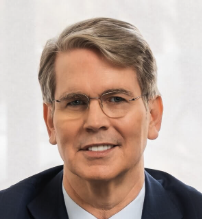
In plain English: he intends to turn what the government owns into money it can spend.
And he is the one man in America with sole authority over the fund born from the last gold rewrite. He said it on camera.
When the questions started, he clarified: he didn't mean repricing gold.
Except all the record that has followed speaks to the contrary.
That August, the Federal Reserve quietly published a research note.
Official Reserve Revaluations: The International Experience
It studies how five governments took the gains on their gold — and turned them into money to spend.
A working manual, in all but name.
The Fed does not publish accident papers.
In Congress, Representative Thomas Massie filed the Gold Reserve Transparency Act — demanding the first full, independent, physical audit of America's gold in half a century. You don't audit a vault you intend to leave alone.
And in mid-July, Secretary Bessent went on national television to assure the country that:
“All the gold is present and accounted for.”
Ask yourself: when was the last time a Treasury Secretary had to reassure anyone about Fort Knox?
You reassure people about things that are suddenly in play.
Now, the arithmetic they are all dancing around — the single most explosive number in American finance:
The United States Treasury owns 261.5 million ounces of gold.
On its own books — in its own monthly report, public, printed, verifiable by anyone with an internet connection — that gold is valued at $42.22 an ounce.
The number Congress froze in 1973. The fossil of the last rewrite. Never updated.
Total book value: about $11 billion.
At today's market price, the same metal is worth over $1 trillion.
That is a 96-to-1 gap between what the law says America's gold is worth and what it is actually worth.
Sitting in the basement. Against a $39 trillion national debt. One signature from being unlocked — through a fund built for exactly this purpose.
The last country to face a failing anchor with a vault full of underpriced gold was the U.S.
In 1934. And we know exactly what Washington chose to do.
And if you're thinking a number on a government ledger can't touch your life — that $42.22 is an accounting curiosity — look at what happened to ordinary Americans the last time Washington corrected it.
In 1971, a 30-year mortgage ran about 7%. The median American house cost roughly $23,000.
Then Washington rewrote the number.
Within 10 years, that same house cost nearly $64,000. Not because houses got better — because the dollars they were priced in got smaller. Mortgage rates climbed past 18%. Groceries more than doubled. A dollar in a savings account lost roughly half of what it could buy.
That is what a rewrite feels like from a kitchen table.
| Line item | 1971 | Within 10 years |
|---|---|---|
| House (median) | $23,000 | nearly $64,000 |
| 30-year mortgage rate | about 7% | past 18% |
| Groceries | ≈$23 per week | more than doubled |
| Savings ($1 in the bank) | $1.00 | ≈ $0.50 in purchasing power |
Every line in your budget — your paycheck, your mortgage, your groceries, your savings — is written in the unit being repriced.
Because here is the part nobody says out loud: the government doesn’t mark gold up. It marks the dollar down. In writing.
The people who held only paper paid for the last one. The people who held gold — and the right gold stocks — you already know exactly what happened to them – gains as high as 10,000%.
So no, $42.22 is not a relic. It is the last official price of the old dollar. The gap between it and $4,000 is the size of the correction Washington has not yet admitted.
But a revaluation is only half of what’s coming.
Because this time, Washington isn’t just preparing to rewrite gold’s price.
It has started buying the industry.
6 Moves. 14 Months. One Metal.
You’ve probably seen a few of these headlines. Almost nobody has seen them together.
The financial press covered each one as its own little story. Line them up in order, and they stop looking like stories.
They look like a campaign.
Move one — March 20, 2025: President Trump signs an executive order on emergency mineral production. Buried in its definitions, alongside uranium and copper, one word the press skipped past: gold. The President of the United States formally designated gold a strategic priority of the American government.
Move two — through 2025 and 2026: The Bureau of Land Management begins clearing the runway for American gold mines — approvals, land priority, expedited reviews. Forbes calls this push “one of the U.S. government’s most important activities” on critical minerals — and reports, in the same sentence, that it is advancing without fanfare.
The government’s most important mineral push. Moving in silence.
That pairing is not an accident. It’s a strategy — one that hasn’t been priced yet.
Move three — August 1, 2025. The Federal Reserve publishes its revaluation research. Five countries. One playbook. The manual sits in public view to this day.
Move four — November 19, 2025. The full-audit bill reaches the United States Senate — companion to the House version filed that June. The last physical congressional inspection of Fort Knox: 1974. The paperwork to open the vault door is now written in both chambers.
And buried in the Senate bill’s own title, a detail that tells you everything. It doesn’t just call for a count. It calls for the gold itself to be upgraded — re-refined to meet modern global market standards.
Move five — May 21, 2026. The board of the Export-Import Bank of the United States votes — unanimously — to approve a federal loan of nearly $3 billion to build a gold mine on American soil.
Not a chip plant. Not a battery factory. A gold mine. Nearly three billion dollars.
After a 25-day notice to Congress in which nobody objected.
It is one of the largest financings in the bank’s modern history.
And it moved through the one bank whose legal mission includes beating China.
Move six — PARTNERED. Open this company’s own federal filings and press releases.
You’ll find language I have never seen attached to a gold project in 35 years since I started on Wall Street:
“…substantial support and partnership from the Department of War.”
And the government’s own words for the financing: “a whole-of-government approach.”
The Department of War. In writing. On a gold mine.
Any one of them is a curiosity. All six, in sequence, while China digs and the world’s central banks finish unseating our debt?
That’s not a curiosity. That’s the counterattack.
expected 2H 2026
And if you want to know what happens to a stock when this machine finishes deciding — when Washington goes from lending to owning — you only need to look at the government’s own recent track record.
Because Washington has been rehearsing.
When Washington Buys, the Stock Skyrockets
Something historic has changed in how the American government operates — and Wall Street is still catching up to it.
For most of your lifetime, Washington influenced industries with grants and contracts.
Now it buys them.
Over the past 18 months, the federal government has become a direct shareholder in 26 companies. It has put $23.9 billion to work. And the law now lets it spend up to $205 billion.
$205 billion is more than the federal government spends in a year on NASA, the FBI, and the Border Patrol — combined.
All of it authorized for one purpose: buying pieces of American companies. And barely one-tenth of it has been deployed.
But we know what’s possible when the government starts burying itself in companies…
In 2005, a struggling startup called Palantir couldn’t raise a dime.
At its pitch to Silicon Valley’s most powerful venture firm, the legendary partner across the table spent the meeting doodling in his notepad. Only two investors on Earth said yes: founder Peter Thiel — and the Central Intelligence Agency, writing checks through its venture arm.
The CIA. The only outside investor in the room.
Today Palantir is valued around a quarter of a trillion dollars — worth more than Lockheed Martin, Northrop Grumman, or General Dynamics.
The government’s early conviction, purchased for a rounding error, became one of the greatest investments in American history. You already know I put my readers into it around $7 – before Palantir surged to a peak over $200.
A top-end gain of 2,857%+.
That was the first generation.
The current generation buys in the open — and the gains are on the public tape:
July 10, 2025. The Pentagon announces it is becoming the largest shareholder of MP Materials — America’s only rare-earth miner. Equity. A guaranteed price floor. A promise to buy 100% of the new facility’s output. The stock jumps 50.6% in a single session. Within 9 weeks it’s up 226%.
October 6, 2025. After the closing bell, Washington announces a stake in a tiny Alaska miner called Trilogy Metals — buying in at $2.17 a share. Within a week the stock is up 401.9%. Every $10,000 surged to more than $50,000 in a matter of days.
And MP? By mid-October it had crossed 500% on the year — Washington now its largest shareholder, the gains compounding for anyone who moved when Washington did.
August 2025. The government converts $8.9 billion into a 9.9% stake in Intel — at $20.47 a share. Intel has since soared past $130. That $8.9 billion stake is now worth roughly $57 billion — a $48 billion profit for Washington, in under a year. Up more than 500% since the stake.
May 2026. It takes positions in nine quantum-computing companies in a single week. Rigetti jumps 30% in a day. D-Wave, 33%. And IonQ — a company that wasn’t even included — jumps 12% just for standing near the shopping cart.
That is the pattern, confirmed across two dozen deals: when this machine picks a company, the stock doesn’t drift higher.
It gaps.
50% in a day. Four hundred percent in a week. Five hundred percent in a season. Even 2,857%, like Palantir.
Now hold the two threads of this letter in your hands at the same time.
Thread one: Washington is preparing the third great rewrite of gold — the event that historically pays 474%… 558%… 2,200% — and in the wildest cases more than 10,000% — to gold-stock holders.
Thread two: Washington now buys direct stakes in the companies it deems strategic — and the stocks it touches surge.
For the first time in American history, both threads point to the same place.
One company.
The one gold company the machine is already funding.
I call it the Arsenal.
And when I show you what’s buried in its filings, you’ll understand why I believe it is the single most important stock in America right now.
The Arsenal
Start with the problem Washington cannot say out loud.
Say the United States government ever needs more gold. Maybe to backstop a rewrite of the price. Maybe to stand behind the gold-linked Treasury bonds already being pushed in Washington. Maybe just to keep pace in a reserve war.
The moment it does, it hits a trap.
It cannot walk onto the open market and buy.
The instant the U.S. Treasury bids for bullion, the price detonates against it.
Every ounce gets more expensive the moment America wants one.
Beijing learned to hide its buying for exactly this reason.
There is only one clean solution, and Washington has already field-tested it:
Buy the source, not the metal.
That’s precisely what the Pentagon did with rare earths — it didn’t buy neodymium on the spot market. It bought the miner: equity, price floor, and 100% of the output, locked at the mine gate before the market could reprice a single pound.
Apply that playbook to gold and Washington’s shopping criteria write themselves. It needs a mine that is:
On American soil, under American law.
Fully permitted — because a strategy can’t wait a decade for judges.
Large enough to matter — the kind of ounces a nation’s reserves are built from.
And small enough that a federal stake transforms it overnight. Remember: the machine’s mining purchases have been small companies. Not $100 billion giants. It bought Trilogy at $2.17.
Here is what stunned me:
In the entire United States of America, exactly one company checks every box.
One.
- ✓On American soil, under American law
- ✓Fully permitted — a strategy can’t wait a decade for judges
- ✓Large enough to matter — reserve-scale ounces
- ✓Small enough that a federal stake transforms it overnight
It has been decades since anyone permitted and financed a new American gold project of this scale from scratch.
The lawsuits alone take longer than most careers.
Projects die in hearing rooms. America — the nation with the world’s largest gold hoard — nearly forgot how to build the machines that produce it.
This company survived the gauntlet.
It spent roughly 15 years and endured wave after wave of legal challenges.
It won its federal Record of Decision. It won its Army Corps water permit. It won its final state permits this January.
And when opponents made their last stand in federal court this June — demanding the work be halted — the judge refused.
The bulldozers kept rolling. Construction began last fall. It is happening right now, as you read this.
- 1~15 YEARS of federal review and legal challenges
- 2Federal Record of Decision — WON
- 3Army Corps water permit — WON
- 4Final state permits — WON, this January
- 5Federal court challenge — judge refuses to halt work, this June
- 6CONSTRUCTION UNDERWAY — began last fall
Then came the money.
This spring — as you saw — a federal bank’s board voted, unanimously, to put nearly $3 billion behind this single project.
Combined with the cash already in the company’s treasury, the project is fully funded to first production.
A brand-new American gold mine of true reserve scale. Permitted. Court-tested. Under construction. Federally financed.
The only one of its kind in a generation.
And this is the company those filings belong to.
The sentence that made me put everything else aside — the war department’s name, in writing, on a gold mine — was written about this project.
Why is it there?
Because of a secret buried in the rock itself.
This deposit carries a second metal alongside its gold.
A metal so critical to American weapons production that China formally banned its export to the United States — a chokehold Washington is now desperate to break.
This one American deposit is the country’s only domestic reserve of it. Gold for the dollar war. The banned metal for the shooting war.
Both from the same pit. Which is why I call this company the Arsenal — and why, I believe, the war department’s name is already on its papers.
One more thing.
This is a tiny company. Roughly one-fiftieth the size of Newmont, the American gold major.
It produces no revenue yet — its value is the ore body, the permits, and the federal money assembling around it.
That cuts both ways: it is exactly the profile Washington’s machine buys, and exactly the profile that gaps the prices when it does.
Knowing a company’s name is not the same as knowing why to own it — the entry strategy, the price targets, the timeline. I’ve put the complete case in a report I’ll show you in a moment.
But first, understand the clock you’re racing against.
The Day the Math Changes
You might be asking the logical question:
If this is a years-long story, why act now? Why not wait and watch?
Because markets don’t reprice when mines pour gold. They reprice when uncertainty dies.
Right now, one final uncertainty hangs over the Arsenal: the federal financing is approved — but the final papers have not been signed. They’re expected in the second half of this year.
The day that ink dries, three things happen at once:
- 1The single largest risk — funding — goes to zero on the company’s books. They have all the money they could need, courtesy of Uncle Sam.
- 2The United States government becomes financially fused to this project’s success, with billions of taxpayer dollars that only come back if the mine gets built.
- 3And every institutional model on Wall Street re-rates the stock from “speculative developer” to “federally-backed strategic asset.”
Not the day the gold pours. The day the money closes.
And hanging above that is the bigger clock — the one running in Beijing’s vaults and the Treasury’s basement.
Every month, China adds to the hoard it hides. Every month, the gap between $42.22 and the real price grows more absurd. Every month, the pressure on Washington to answer builds.
Two fuses. One stock sitting on both.
What You Own While You Wait
Now, I can hear the fair question: this company produces no revenue yet. What exactly does a shareholder own today?
First, you own the ounces. Millions of them. Drilled, measured, and certified in the ground — one of the richest open-pit gold deposits in the country.
And ounces in the ground carry huge leverage.
When gold rises, the market doesn’t just reprice this year’s production.
It reprices every ounce at once.
Every $100 gold climbs rewrites the value of the whole deposit.
Second, you own the permits.
15 years of federal review.
State review.
Water rights.
Court wins.
In America, those approvals have become nearly impossible to get.
That’s why no rival can appear behind this company.
This company already crossed the finish line.
Its permits alone are a moat it would take a competitor decades to cross.
Third — and this is the one nobody models — you own the relationship. Washington has already chosen this project: financed it, partnered with it, written the war department into the filings.
And if Washington ever decides to own a gold miner outright — every pattern in this letter says it will — ask the only question that matters: which one?
Remember how the Intel stake happened.
Washington didn’t hunt for the best chipmaker in America.
It converted money it had already given Intel into shares.
The Pentagon did the same with MP — it bought into the rare-earth miner it was already funding.
That’s the pattern.
The money goes first. The ownership follows the money.
There is exactly one gold company in America with nearly $3 billion of Washington’s money already committed to it.
$3 BILLION
A fortress balance sheet, fully funded to production, in the only new American gold build of its generation.
That’s what you can own today.
And very soon, that holding could follow a trend in history that has taken certain stocks 474%… 558%… 2,200%… even more than 10,000% higher.
At full production, this is projected to be one of the largest gold mines in America — the only reserve-scale American gold build of its generation.
The only mine in this country able to produce the banned second metal — the one metal the Pentagon cannot buy anywhere else on this continent.
And the first gold company in modern history with Washington already behind it as financier and partner — and, if the machine completes its pattern, as owner.
90 years ago, a rewrite crowned Homestake the highest-priced stock in America. It held that throne for a generation.
Today, the Arsenal is still a fiftieth the size of Newmont.
That’s not the flaw in this story. That’s the before picture.
The Billion-Dollar Conviction
There is a man in New York who saw this war coming before almost anyone on Earth.
You know his name — or at least his legend.
In 2007, John Paulson executed what Wall Street still calls the greatest trade in history: a bet against the American housing bubble that made his fund roughly $15 billion while the rest of the financial world burned.
He saw the rot inside the system before the system did.
So pay very close attention to what that same man has been quietly doing for the past decade.
Starting in 2016 — years before the freeze, years before the executive order, years before a single federal dollar was approved — Paulson began buying one tiny gold company.
Not a major. Not a safe blue chip.
The Arsenal.
He bought through every permit fight, every lawsuit, every year Wall Street ignored the stock. He installed his own longtime partner as chairman of the board.
And then, in June of last year — a decade into the position — he wrote one more check: $100 million, in a single purchase at $13.20 a share, taking his total investment to $185 million.
A decade of buying. Zero retreats. Doubling down late.
Today, the stock is still under $20.
His firm is the company’s largest shareholder. Filings have put the stake at roughly a third of the entire company. Some recent counts put it closer to half.
Call it a billion dollars, parked in one tiny stock.
One man. One tiny gold stock. A billion dollars of conviction.
When Reuters asked Paulson why he’d gone this deep into gold, he didn’t talk about inflation. He didn’t talk about jewelry demand.
He talked about February 2022.
He put it simply:
“When the war started, Russia’s physical gold stayed safe — but all their cash — the paper reserves — were confiscated.”
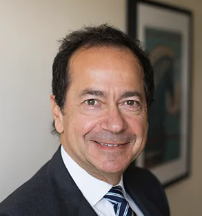
The man who saw the housing collapse coming is describing the exact event this letter is built on.
The freeze. The flight. The central banks piling into the one asset that cannot be switched off.
He’s been putting a billion dollars worth of his money where his mouth is for a decade.
In the spring of 2025, he told Reuters he expected gold in the high-$4,000s within three years.
It took 9 months.
The greatest-trade investor made his second great call. Then Washington financed the company he’d already spent 10 years buying.
He isn’t waiting for the signature.
He’s already positioned in front of it.
The Replay Math
Last time the gold price was rewritten, the metal itself went on a 2,329% bull run.
And miners went ballistic… with one, Copper Lake, surging more than 10,000%...
This company, The Arsenal, is much more than just another gold stock swept up in a roaring bull market.
It’s the smallest, most strategically-loaded piece on the board, backed by committed federal billions and active war department filings… with a financing package from the EXIM bank that eclipses its own actual market cap.
Layered on top is a second force: when Washington moves from interest to ownership, past investors saw gains of 50.6% in a day, 401.9% in a week, and over 500% in a season, turning a $10,000 position into $60,000 within a year.
Even when gold stood still in the early 1980s, a single Canadian discovery sent surrounding junior miners up an average of more than 4,000%.
Today, the catalyst and the metal are loaded together. These two documented, historic forces are converging for the first time ever on one tiny stock.
In three decades of running gain projections, I have never seen two massive engines pointed at a target this small.
One target.
You’re Already In This Trade — On the Losing Side
Here is the part of this letter I need you to really understand:
You do not get to sit this one out.
Every rewrite in American history was paid for by the people holding cash.
In 1934, Americans went to bed with dollars and woke up 41% poorer against gold. No warning. No appeal. A pen stroke.
Through the 1970s rewrite, the dollar quietly surrendered more than half its purchasing power. Everyone with a savings account paid the toll — most never understood what hit them.
If the third rewrite comes, the bill lands where it always has.
Maybe Washington marks its trillion-dollar hoard up to its real price. Maybe it stands new bonds on top of the gold. Maybe it simply lets gold run while the world’s central banks finish dethroning our debt.
Every version ends the same way:
On the savers. On the cash. On you.
You are already enrolled in this trade. Holding dollars IS the position. The only question is whether you’re on the paying side or the collecting side.
Right now, you’re on the paying side. So is almost everyone you know. Gold has more than doubled since my $1,800 call — and the average American retirement account holds almost none of it, and even less of the miners.
Meanwhile, look at the people who moved early. The world’s central banks — the most conservative money on Earth — have made gold their #1 asset. Their hoard is approaching $4 trillion in value, compounding while ordinary savers earn a rounding error.
They’re standing on the collecting side of the third rewrite.
Are you?
Collecting Side
Every month you wait, Washington moves. Another vault fills in Hong Kong. Another filing lands in Washington. Another inch of ink dries on the Arsenal’s financing.
That changes today.
I’ve taken everything my firm has uncovered and put it into a single report. The company’s name and ticker. My exact entry strategy. 3 price targets, in rising order. The timeline of federal triggers to watch. The full story of the second metal. And my case for what this company becomes over the coming decade.
It’s called:
America’s #1 Gold Stock:
The Arsenal
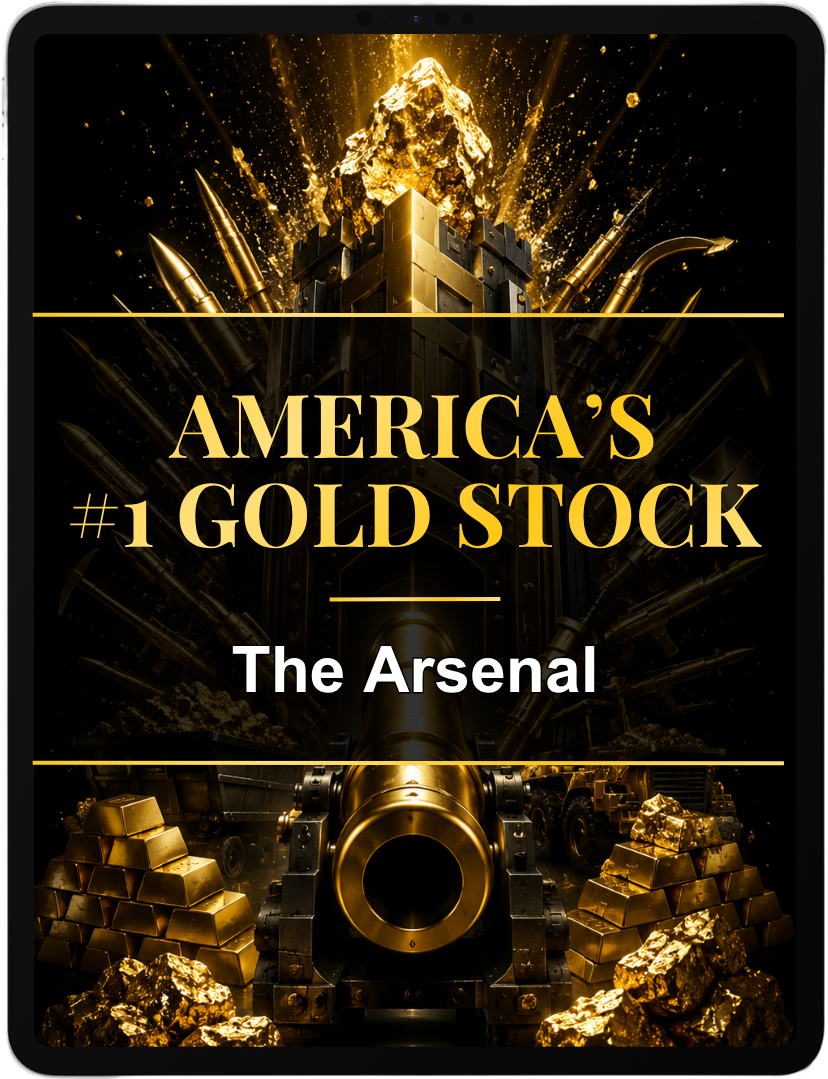
It’s waiting for you right now.
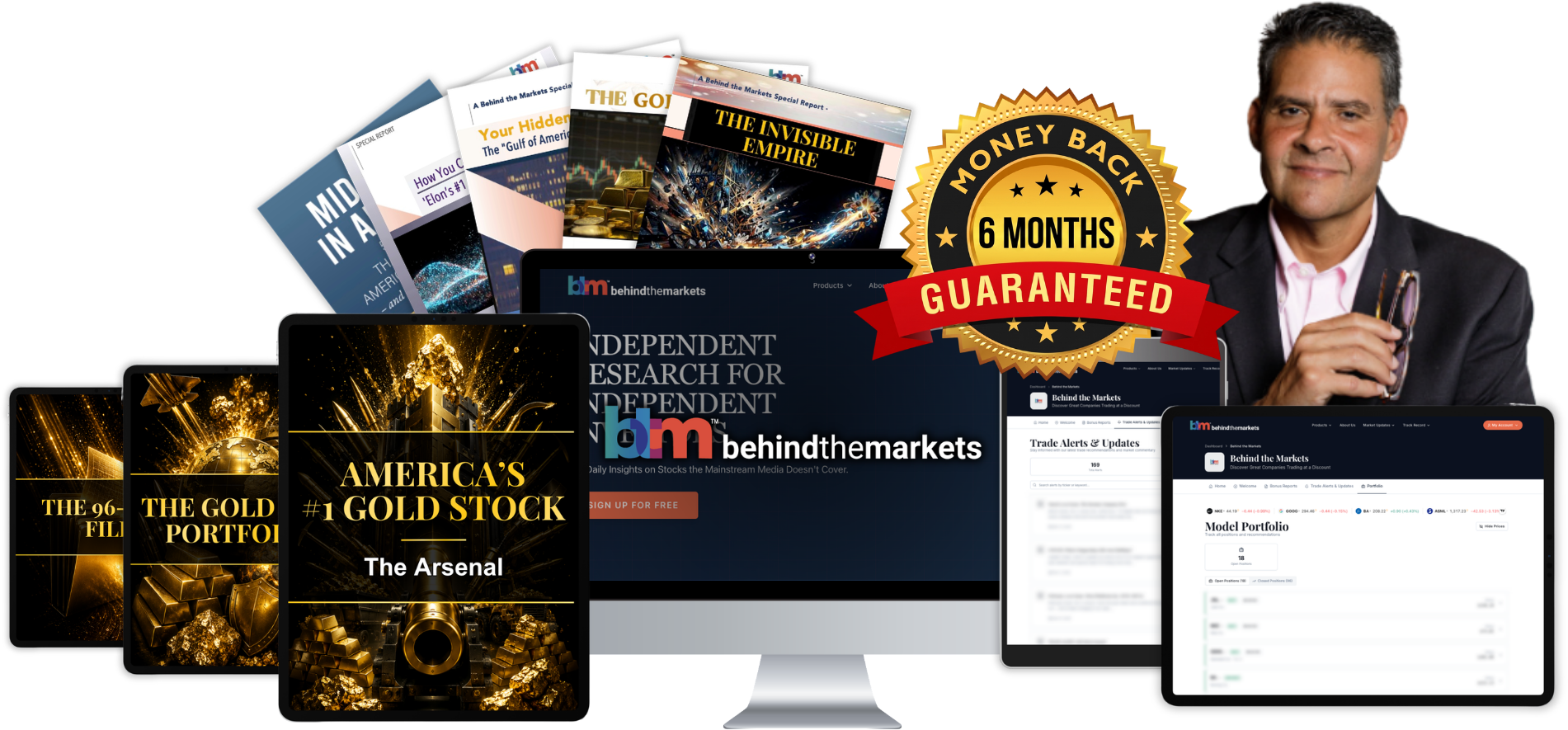
But I’m only making it available to members of my flagship research service, Behind the Markets.

And today I’m opening the doors to 500 new members.
I want you to be one of them.
Here’s why I believe accepting this invitation could be the single most profitable financial decision you make this decade.
Why I Came Out of Retirement
In 2018, I came out of retirement. I’d spent years away from publishing, enjoying time with family. But Wall Street was in my blood.
My first recommendation out of the gate — Intelsat — jumped 339% in four months.
I haven’t slowed down since:
AeroVironment, the defense drone builder — a 120% gain.
C3.AI, flagged before the world knew the acronym — 133%.
Eli Lilly — readers had the chance to lock in 151%.
Viking Therapeutics — a 309% winner.
IonQ, at the frontier of quantum computing — we locked in 257%.
Micron — the chip-war play. Held from my first recommendation, up 677%. Every $5,000 could have come back as $38,850.
Rocket Lab — up 2,500% since I told readers to buy at $3.80. Every $5,000 invested ran as high as $130,000.
Axon — recommended at $28, years before Wall Street understood it. Up more than 3,000% since.
And while I didn’t ride every one of these recommendations to their absolute peak - we banked profits along the way - that is not a cherry-picked list.
Across eight years and every closed recommendation — winners and losers combined — my research has delivered a 71% win rate and a 40% average return.
Three out of four calls correct. For nearly a decade.
But the percentages aren’t the point. The method is the point. When I found Palantir at $7, I wasn’t reading software reviews. I was reading government contracts. I saw the one company the American security state could not function without — before Wall Street knew what it was looking at.
That is the exact lens that found the Arsenal.
Same method. Same discipline. Same tell: the government’s fingerprints, in writing, before the crowd looks.
My readers aren’t day-traders or gamblers. They’re business owners, retired professionals, doctors, engineers, and veterans — people who want their money positioned where the most powerful institutions in the country are actually moving, not where cable news says to look.
“Thank you for giving me another ‘set of eyes’ on how I should approach managing my and my family’s money. With your help, our ship floats a little higher on the lake.”
“Thank you Dylan and team for the most informative and well researched investment advice I have ever received.”
“This one trade has helped 2 old retired people more than you will ever know.”
Every month, my complete briefings — names, tickers, timing — go exclusively to members of Behind the Markets.
The Arsenal is the most urgent opportunity I’ve found in five years. But it is not the only piece on this board.
Because when a monetary war goes hot, the wealth doesn’t flow to one company alone.
FREE BONUS REPORT #2:The Gold War Portfolio
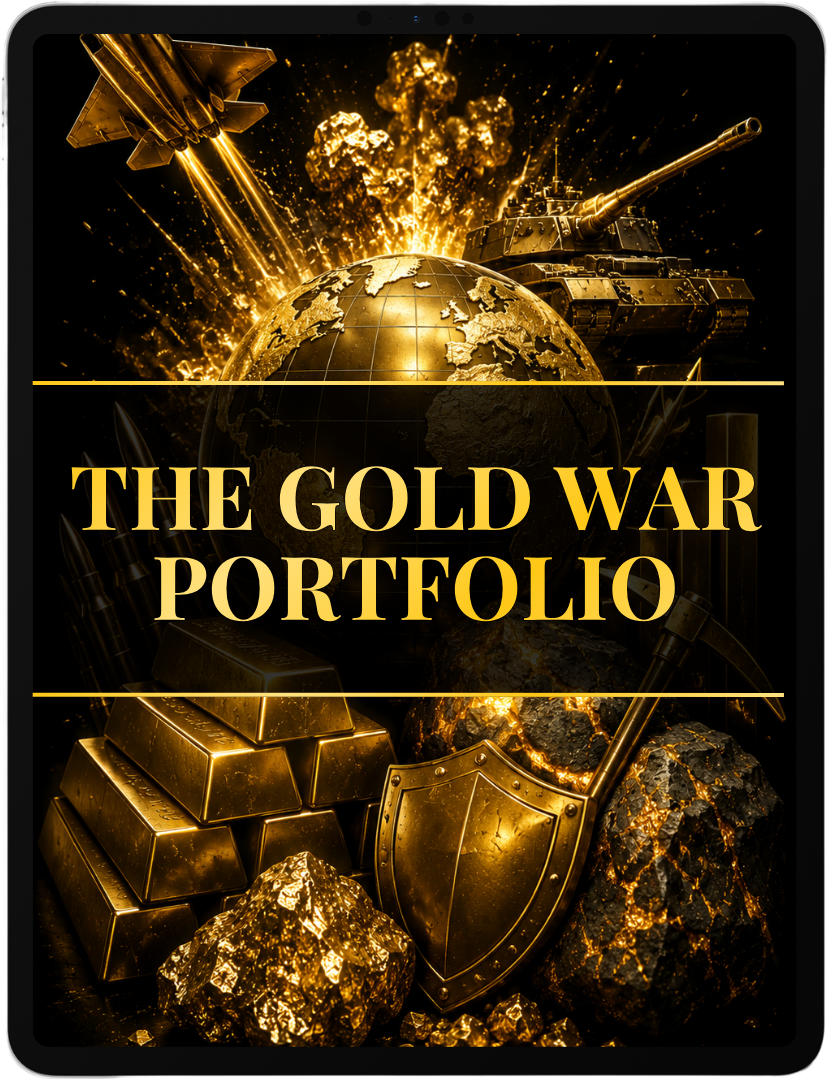
While the Arsenal sits at the center of Washington’s counterattack, the war doesn’t stop at the gold map. The same three forces — the dollar rewrite, the minerals push, the flight to hard assets — are repricing an entire class of positions in my book right now. The three strongest:
The Stealth Gold Giant. One of the biggest gold producers on Earth doesn’t call itself a gold company at all. It’s a copper giant. And its two metals — copper and gold — are the same two metals named side by side in the President’s mineral order. Every year, almost as a footnote, it pulls more gold out of the ground than most gold miners on the planet. Wall Street prices the copper. The gold war reprices the footnote.
The Payout Fortress. A $100 billion mining fortress. It owns one of the great copper-gold mines on Earth. Readers who followed my call last July are already up more than 50%. They’ve collected $4.02 per share in dividends on top. In a long war, this is the position that pays you to hold the line.
The Enrichment Chokepoint. While everyone watches gold, Washington has been circling another material it cannot lose: the fuel for America’s nuclear reactors. One company makes it here. The only American-owned company enriching that fuel on U.S. soil. It already holds nine-figure federal contracts. And the same machine that assembled around the Arsenal is now assembling around it.
3 companies. 3 different ways to stand on the collecting side. Full names, tickers, and entry strategies — yours free the moment you join.
FREE BONUS REPORT #3:The 96-to-1 File

This is the report I’d read first.
It answers one question: how would a 1934-style rewrite actually happen in 2026?
I walk you through it, step by step. The law that allows it. The fund that would pull the trigger. The gold-backed bond plan already moving through Washington. And the exact filings to watch — the ones that would tell you it’s starting.
Then I hand you one more position. The wildcard. Washington’s newest minerals order points straight at it: the one American company set up to mine the metals no rival can touch — because they sit on the ocean floor.
If revaluation day comes, every strategic-metal stock on the board jumps at once. This is the smallest charge with the longest fuse.
If the third rewrite arrives the way Nixon’s did — announced on a Sunday night, before the markets in Asia could open — this file is the difference between panic and a plan.

I want you to be completely comfortable test-driving this research.
Take Behind the Markets for a full six months. Read every issue. Download every report. Follow every position.
If at any point — for any reason — you don’t believe this is the most valuable, actionable research you’ve ever received, email our team and I’ll refund every penny.
And you keep everything you’ve downloaded. The reports, the tickers, the analysis. Forever. Even if you cancel.
I can offer that because I know what happens when serious investors get this research at the right moment in history. They don’t cancel. They stay for years. They tell their friends.
So what does it cost?
The Cost
A Bloomberg Terminal — the tool Wall Street uses to watch the flows I’ve shown you — runs $31,980 a year.
An elite financial advisor managing a $500,000 retirement takes roughly $10,000 a year in fees, plus 20% of any gains. Ten years of that and the flat fee alone has consumed $100,000 — a fifth of your money — before they touch a single gain.
And I’d wager not one in a hundred of them has read the Fed’s revaluation paper.
A single hour with a monetary-policy consultant bills out over $1,000.
But you won’t pay anywhere near that for a membership to Behind the Markets.
I’m going to price a full year of my research at just $49.
That’s roughly 13 cents a day for 12 months of Behind the Markets, the complete model portfolio, every weekly alert — plus America’s #1 Gold Stock: The Arsenal, The Gold War Portfolio, and The 96-to-1 File.
5 fully-researched positions across 3 reports.
If just one of them ever doubles, a $5,000 position returns $5,000 in pure profit — more than 100 times the price of admission.
One stock. One double. The rest is upside.
yr + 20% of gains

13 cents a day
Before You Decide —
A Free Pick, Right Now
Members receive vetted recommendations every month. Picks exactly like the one I’m about to hand you free, right here, before you’ve paid a dime.
Kinross Gold. Ticker: KGC.
Kinross is one of the largest gold producers operating on American soil — Nevada, and above all, Alaska.
And I confess the poetry is half the reason I’m giving it away:
Kinross’s flagship American operation is a massive Alaskan gold mine literally named Fort Knox.
While Washington circles the real Fort Knox in Kentucky, you can own the one in Alaska — today, in your regular brokerage account.
Kinross trades near 12-times earnings.
The average big American stock trades near twice that. Meanwhile, the metal Kinross pulls out of American ground sells near $4,000 an ounce. And central banks — as you now know — have built a floor under that price with the heaviest buying since 1950. Every dollar gold holds above Kinross’s cost of mining it falls almost straight to the bottom line.
Wall Street’s average price target sits at $40.24. That’s about 74% above recent prices.
Timing: Kinross reports quarterly earnings in a matter of days. If you’re going to buy it, my strong preference is before the market sees those numbers. Not after.
That’s yours. Free. No subscription, no credit card, no strings.
The Company I’d Buy Before Kinross
Kinross is a fine company. A real position. I just handed it to you.
But it is not the best gold stock in America.
Kinross is a producer — it profits from the price of gold.
The Arsenal is a weapon — it profits from the policy of gold.
From the machine you’ve watched assemble across this letter.
The executive order. The Fed’s manual. The audit bill. The federal billions. The war department’s partnership.
Kinross rides the wave. The Arsenal is welded to the hand that makes the wave.
- Profits from the price of gold
- Rides the wave
- Fine expected performance in a bull market
- Profits from the policy of gold
- Welded to the hand that makes the wave
- Federally financed. War-department partnered.
One of them, I’d expect to perform well in a gold bull market.
The other, I believe, is the prime candidate to become the next name on Washington’s shareholder list with gains that could reach as high as 10,000%.
The full details are in your first report. Name. Ticker. Entry price. 3 rising targets. The federal timeline. All of it, 60 seconds after you join.
Two Paths
You have two choices in front of you right now.
Path A: You join today.
You open America’s #1 Gold Stock: The Arsenal tonight. You get the name, the ticker, my exact entry strategy, and the 3 price targets. You position yourself in front of the federal signature — before it dries, not after.
You collect the Gold War Portfolio and the 96-to-1 File. You put the free Kinross trade on before its earnings hit the tape.
You spend $49, protected by a six-month guarantee that lets you keep everything.
And when the third rewrite arrives, you’re standing on the side of it that history has always paid.
Path B: You close this page.
You tell yourself you’ll look into it later. The headlines keep coming — another vault, another filing, another billion — and each one feels a little more familiar, and a little more expensive.
And on the day the announcement finally crosses the tape — the signature, the stake, the number — you’ll watch the stock gap up on your screen and remember this exact moment.
That’s not a guess. That’s precisely what happened to every investor who watched the Pentagon put its name on MP Materials at $30 and decided to wait for a pullback.
There was no pullback. There was $45 by nightfall. There was +500% by autumn.
The cash in your account is already enrolled in this war. Path B leaves it on the paying side — the side that funded 1934, funded the 1970s, and is funding the vaults filling up right now.
Path A costs $49 and moves you to the collecting side.
“Everything I have ever done with your information has turned out profitably. Thank you for continuing to share this information with us.”
“You have more talent for predicting market directions than most other analysts put together.”
“Unbelievably prescient market analysis and insanely profitable investing ideas.”
Don’t be the person who watches the rewrite on television.
Be the person it pays.
Click the secure button below to start your risk-free Behind the Markets membership — and open the Arsenal file tonight.
- ✓12 months of Behind the Markets
- ✓The complete model portfolio
- ✓Every weekly alert
- ✓5 fully-researched positions across 3 reports
- ✓$49 — roughly 13 cents a day
Sincerely,